
Commerce, ERP, and finance agreeing on the same order.
We map what paid, shipped, and refunded mean in each system, then ship replayable jobs with a dead-letter path. Support stops guessing which status is real.
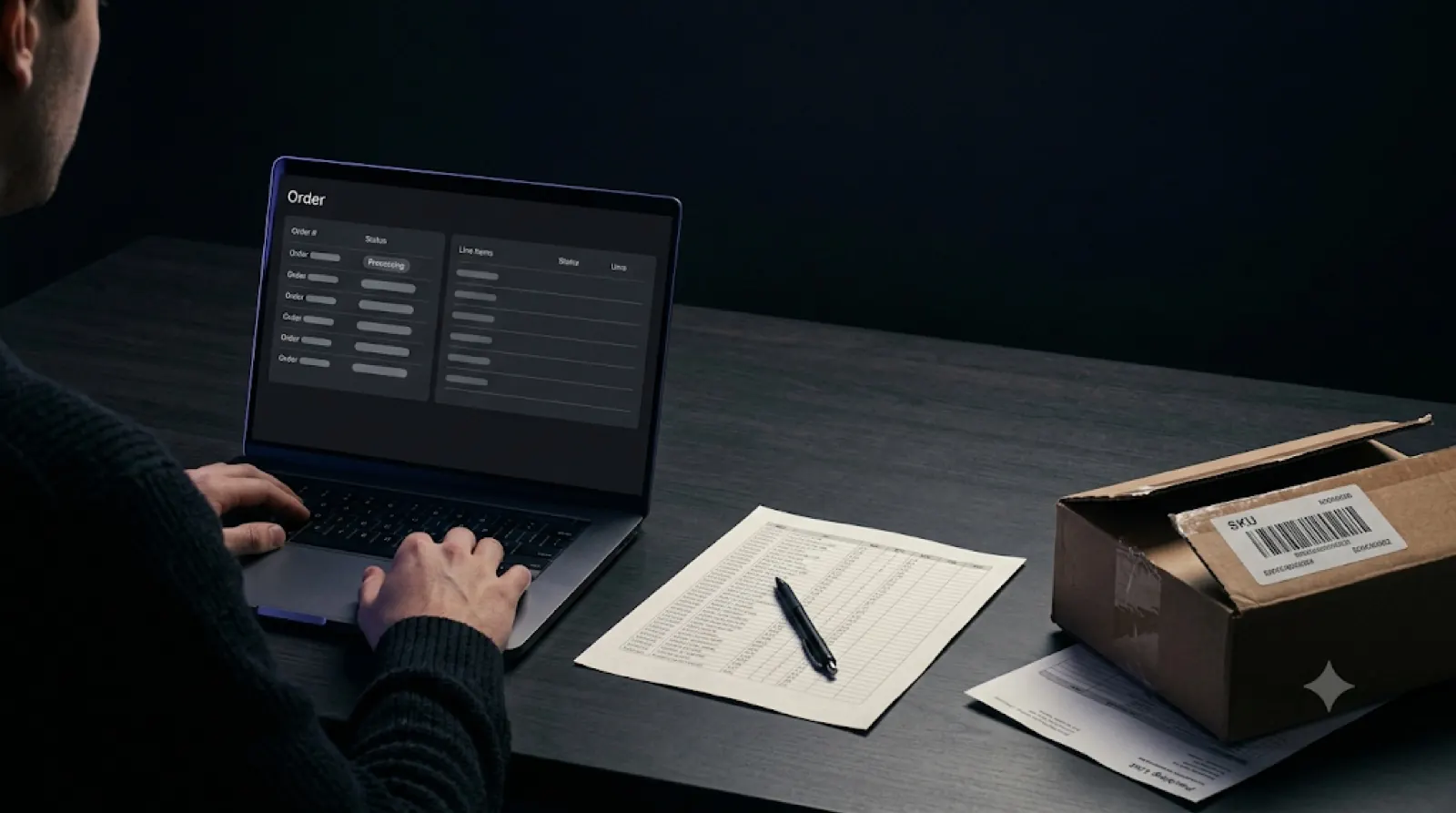
Orders fork into three truths
Store, ERP, and 3PL each have a status. Customer support guesses. Finance reconciles in a weekend file.
One order lifecycle with an explicit owner for each status, so store, ERP, and the warehouse stop forking into three truths.
Nightly CSV, daily fire drill
A file drops. Sometimes. Encoding is a personality. Partial fulfills are folklore.
Events where they matter, batch where it is safer — both with retries you can see and a queue humans can drain.
iPaaS spaghetti
Zaps and recipes nobody owns. A mapping lives in a tool the last contractor still has a seat for.
Owned mappings in a repo your team can read. We will not leave the map in a Zap the last contractor still has a seat for.
What paid, shipped, and refunded mean in each system — with last month’s ugly orders as examples. Your team can read it without that seat.
You own the mappingThe work we actually deliver.
Object map
What customer, SKU, and paid mean in each system — with examples from last month’s ugly orders.
Idempotent sync jobs
Sync jobs that can run twice without double-shipping or double-charging.
Visible retries
Retries you can see, not folklore in a contractor’s laptop.
Dead-letter queue
A failure queue humans can drain when a poison message lands.
Lag alerts
A dashboard for warehouse is fourteen minutes behind — not a hope.
Mismatch runbook
Tax, partial fulfill, and refunds written down, plus which system wins when two disagree.
Connect, hub, or untangle.
Connect
Two systems, one object: orders, stock, or customers.
A reliable sync with idempotency and a place to look when it stalls.
Hub
Several systems, one integration layer.
A small hub with contracts, not a new ERP.
Untangle
The current jobs work until they do not.
Freeze, map, replace the dangerous jobs first.
No junior hand-offs after the proposal.
You see the real storefront, not a slide deck.
Launch week is the start of the engagement.
Every page leads to a real conversation.